Tyre inflation may appear to be a straightforward compressed-air application, but busy tyre shops can inflate, deflate, inspect, repair, and service numerous tyres throughout the working day. Selecting a suitable Tyre Inflation Reciprocating Air Compressor therefore requires attention to pressure, air delivery, workload, storage, and equipment condition.
For tyre service centres in Coimbatore, the compressor should be selected around the types of vehicles being handled and the frequency of operation.
Start With the Vehicle Category
A tyre shop may serve only motorcycles and passenger cars, or it may also work with SUVs, vans, light commercial vehicles, and trucks.
These different customer categories influence compressed-air requirements.
Before choosing equipment, identify
- Vehicle categories regularly serviced
- Number of tyres handled daily
- Peak customer periods
- Other pneumatic tools connected to the compressor
- Required working pressure
A compressor that supports a small two-wheeler tyre shop may not automatically suit a commercial vehicle tyre facility.
Pressure Is Only One Part of the Requirement
Tyre businesses naturally pay attention to pressure because tyres must be inflated to specified values.
However, the compressor must also supply an appropriate volume of air.
If several operations draw compressed air from the same system, air-delivery capacity becomes particularly important.
The correct setup should maintain usable pressure without creating unnecessary waiting between tasks.
Consider the Receiver
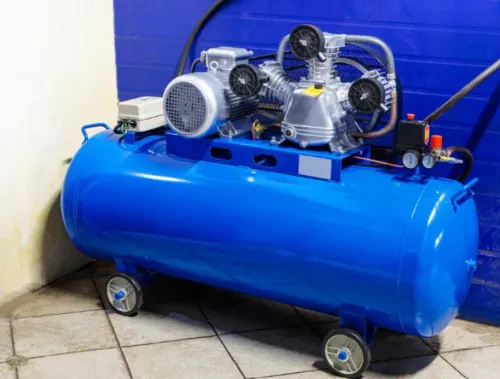
The air receiver provides stored compressed air that can help accommodate intermittent demand.
For tyre inflation, where air demand may rise and fall repeatedly throughout the day, receiver capacity forms an important part of the overall system.
Receiver selection should be matched with compressor output and the expected operating cycle.
Check Whether Other Tools Share the Compressor
Many tyre shops use compressed air for more than inflation.
Pneumatic impact tools, air guns, tyre-changing equipment, and other workshop devices may share the same supply.
Ignoring these loads when selecting the compressor can result in insufficient capacity during busy periods.
A complete equipment list should therefore be prepared before deciding on compressor size.
Control Air Leakage
Compressed-air leakage wastes compressor output and can make an otherwise adequate system appear undersized.
Common leakage points can include
- Hose connections
- Couplings
- Fittings
- Valves
- Damaged air lines
Routine checks can help identify leaks before they become significant.
Drain Moisture and Follow Maintenance Requirements
Compressed air can produce condensate as air cools.
Receiver drainage and other maintenance procedures should be carried out according to equipment recommendations.
Filters, lubrication where applicable, belts, fittings, and general compressor condition also require periodic attention.
Evaluate the Supplier as Well as the Machine
For a commercial tyre business, equipment availability is only one part of the purchasing decision.
It is useful to choose a provider that can discuss the actual application and explain the relevant compressor configuration, operating requirements, and maintenance considerations.
Greentech High Pressure Washer Pumps manufactures reciprocating air compressors and automotive cleaning equipment in Coimbatore. Tyre shops considering a compressor can provide details about vehicle mix, daily workload, pneumatic equipment, and available utilities so that the requirement can be evaluated more accurately.
Build the Setup Around Daily Operations
Coimbatore supports a large network of tyre shops, vehicle workshops, fleet operators, and automotive businesses serving customers throughout western Tamil Nadu. Some tyre outlets primarily handle two-wheelers and cars, while others regularly service commercial vehicles.
That variation makes application-based selection particularly important.
A Tyre Inflation Reciprocating Air Compressor should provide appropriate pressure and air delivery for the actual tyre-service workload while fitting the available installation space and maintenance routine. When receiver capacity, connected tools, air leakage, vehicle categories, and peak demand are considered together, tyre shops can make a more informed equipment decision.
Keywords